How Juvenile Pubic Symphysiodesis Works
Juvenile pubic symphysiodesis (JPS) is a preventative procedure most effectively performed on puppies between 15-18 weeks of age.
JPS biologically alters the orientation of the hip sockets, so the femoral heads are less likely to subluxate (slide out of joint). The bottom of the pelvis where each bony half unites is called the pubic symphysis, which in young puppies is still cartilaginous.
JPS involves premature and purposeful fusion of the pubic symphysis cartilage using electrocautery, which prevents further bone growth in that area. The rest of the pelvis continues to grow and the surgically fused pubic symphysis creates a mushroom-like pattern of development where each half of the pelvis rotates “up and out”, creating a hip socket that more effectively covers and holds the femoral heads in place.
Diagnosis
- Gait Evaluation – the doctor observes how your dog walks, noting any abnormalities.
- Orthopedic Exam – we perform specific tests to reveal joint laxity.
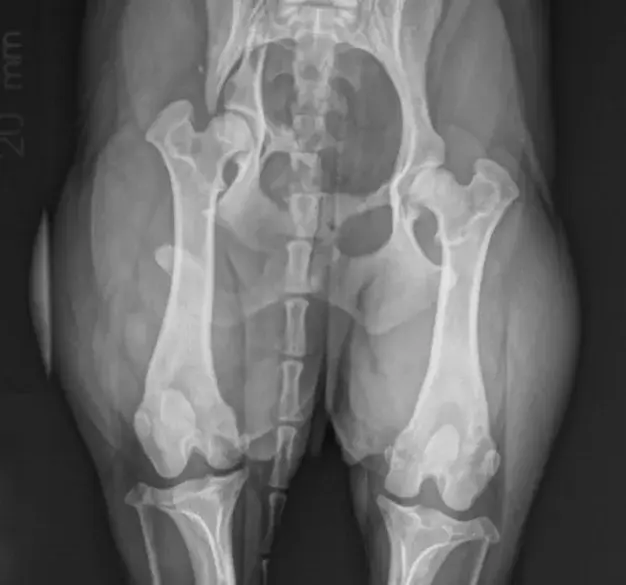
- Radiographs – X-rays show the overall health of both hip joints and the degree of osteoarthritis.
- PennHIP Evaluation – these specialized X-rays provide a reliable and reproducible measurement of hip joint laxity. The PennHIP method is the most reliable indicator for future hip osteoarthritis.
Prognosis
Dysplastic puppies typically return to a normal gait and achieve diminished hip laxity following JPS. When performed on puppies less than five months of age, JPS may effectively reduce the likelihood of progressive osteoarthritis as a result of hip dysplasia. Dogs over five months of age lack sufficient pelvic growth potential, rendering the procedure less effective.
Complications
Not a highly invasive procedure, JPS has few complications. There are two considerations for spaying or neutering dogs having this surgery.
- The shape of the pelvic canal changes after JPS, which can interfere with a female’s ability to give birth.
- Hip dysplasia is genetic, so it can be assumed that if parents have dysplastic hips, so will their offspring.
Recovery
Compared to other more invasive orthopedic surgeries for hip dysplasia, recovery is more straightforward with JPS. You must limit their post-op activity to short duration, slow on-leash walks. The surgeon will perform a follow-up examination to assess healing. Once fully healed, the majority of patients enjoy life without physical restriction.