
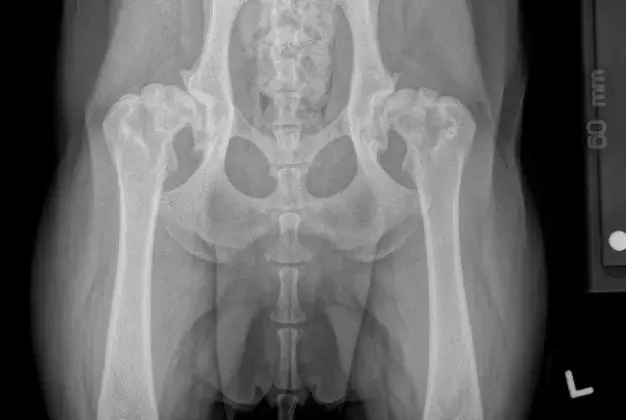
Recognizing the Development of Hip Dysplasia
Canine Hip Dysplasia (CHD) is the most common developmental orthopedic disease in dogs, which means it occurs as puppies grow. It’s a genetic growth abnormality of the hip joint. Both hips are usually affected, but sometimes only one hip frequently shows clinical signs and symptoms.
At-risk breeds for hip dysplasia include, but are not limited to:
- Labrador Retrievers
- Rottweilers
- German Shepherds
- Golden Retrievers
- Old English Sheepdogs
- Giant breed dogs
CHD involves laxity (looseness) of the muscles and ligaments around the hip joint. During development, the femoral head (ball) doesn’t fit well into the acetabulum (socket). Laxity causes the femoral head to subluxate (slip in and out) of the acetabulum. PennHIP method X-rays identify and measure the degree of laxity.
Continued subluxation repeatedly stretches and thickens. This inflames the joint capsule surrounding the hip joint causing cartilage erosion and the development of osteophytes (bone spurs). The femoral head loses its round appearance and the acetabulum becomes flattened. Without intervention, osteoarthritis worsens, causing pain and severely limited mobility.